
LLS Loading Lashing & Securing
Loading, lashing, and securing are the three pillars of cargo safety, ensuring that goods remain stable and undamaged throughout their journey.
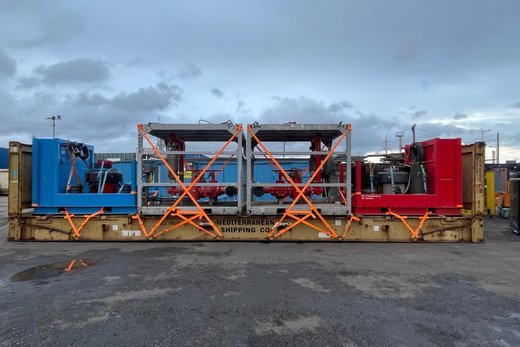
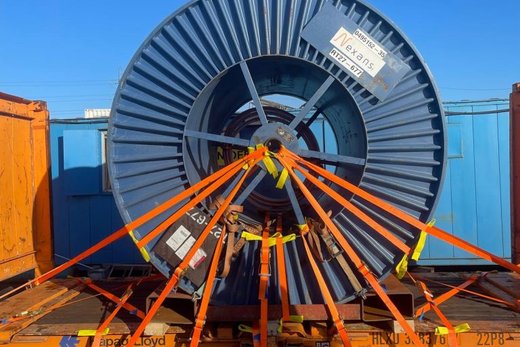
Service Overview
What we deliver for you
Loading
Loading is the process of arranging and distributing goods within a transport vehicle (truck, container, or ship) to ensure balance and efficiency.
- Weight Distribution: Spread the load evenly across the axles or container to prevent tipping or mechanical strain.
- Stability: Keep the centre of gravity as low as possible. Containers or flatracks should be loaded centrally on chocks to spread the weight of cargo. Items should be placed close to the vehicle's bulkhead to prevent forward movement.
- Stacking: Ensure lower layers can support the weight of higher layers. Use pallets or separating materials between stacked items like drums.
Lashing
Lashing involves using physical materials (straps) to fasten the cargo to the transport platform, preventing it from shifting or sliding. Common materials include webbing straps, chains, ropes, wires, and nets. Our main methods consisit of the core directional lashing methods which are longitudinal and transverse lashing to meet regulations.
Longitudinal Lashing prevents cargo from sliding forward or backward (along the length of the vehicle/container) during acceleration, braking, or sudden stops. Critical for heavy or high-center-of-gravity loads.
- Application: Lashings are attached along the length of the flat rack/container, connecting the cargo to front/rear anchor points (e.g., corner castings, lashing rings, or deck eyes).
- Common Techniques:
- Direct lashing: Straps/chains run straight from the cargo to opposite end anchors, creating tension along the longitudinal axis.
- Loop lashing: A single lashing forms a loop around the cargo and anchors at both ends, distributing force evenly.
- Combination with blocking/bracing: Often paired with wooden blocks or metal stops at the base of the cargo to add physical resistance to forward/backward movement.
- Protection: We always use edge protectors or sleeves to prevent sharp cargo edges from damaging web lashings.
Transverse Lashing prevents cargo from shifting side-to-side (across the width of the vehicle/container) during cornering, lane changes, or crosswinds. Essential for loads that are wide or unstable laterally.
- Application: Lashings are positioned across the width, attaching the cargo to left/right anchor points on the flat rack/container sides.
- Common Techniques:
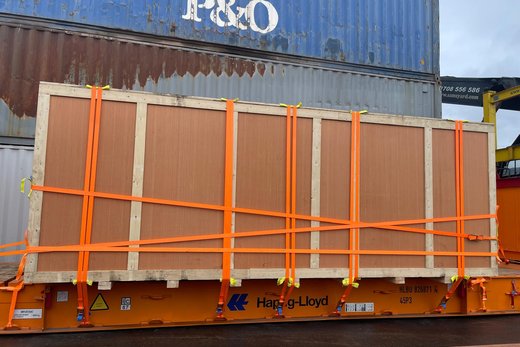
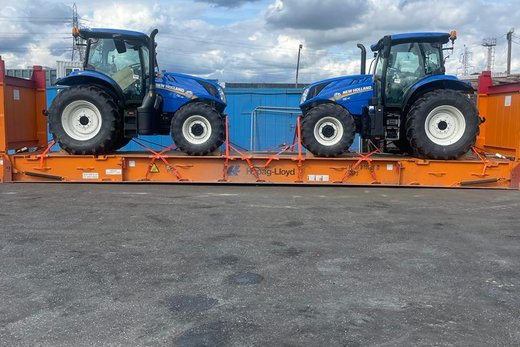
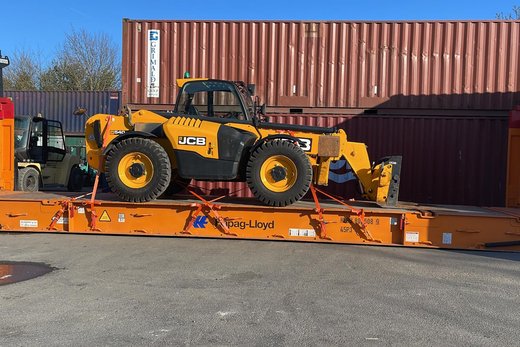
- Cross lashing: Two lashings cross each other diagonally over the cargo (e.g., from left front to right rear, right front to left rear), creating a stable "X" shape that resists side movement.
- Side lashing: Straight straps/chains run from the cargo to adjacent side anchors, providing direct lateral tension. Often used in pairs for balance.
- Top-over lashing: Lashings pass over the top of the cargo and anchor to both sides, pressing the load down while preventing side shift (effective for stacked or bulky goods).
Additional Lashing Methods We Use
- Diagonal Lashing: Combines longitudinal and transverse elements, running at an angle between anchors. Used to resist both forward/backward and side-to-side movement simultaneously, ideal for irregularly shaped cargo.
- Bottom Lashing: Lashings pass under the cargo (if possible) and anchor to opposite sides, pulling the load downward and securing it to the deck. Reduces the risk of the cargo lifting or tipping.
- Round Turn Lashing: A lashing is wrapped multiple times around the cargo and anchors, increasing friction and tension. Useful for cylindrical or round loads (e.g., pipes, drums) that are prone to rolling.
Securing
Securing refers to the final verification and maintenance of the load's stability throughout the entire transit.
- Calculation: The total strength of the lashing (Lashing Capacity or MSL) must exceed the forces expected from braking, cornering, or sea motion.
- Inspection: We check lashing points, strap tension, and edge protectors before the container leaves for the port.
- Auxiliary Tools: We use chocks to fill gaps between cargo and container walls.
Perfect For
Ideal clients & use cases
Our loading and securing services are designed for businesses that can’t leave safety to chance. Whether you are shipping high-value assets across the UK or exporting industrial machinery globally, we ensure your cargo meets every regulatory standard for road and sea.
1. Global Manufacturers & Engineering Firms We support manufacturers of oversized equipment—from industrial boilers to CNC machinery. Our team ensures that heavy, concentrated loads are correctly distributed and bedded to prevent structural damage to the transport unit or the cargo itself.
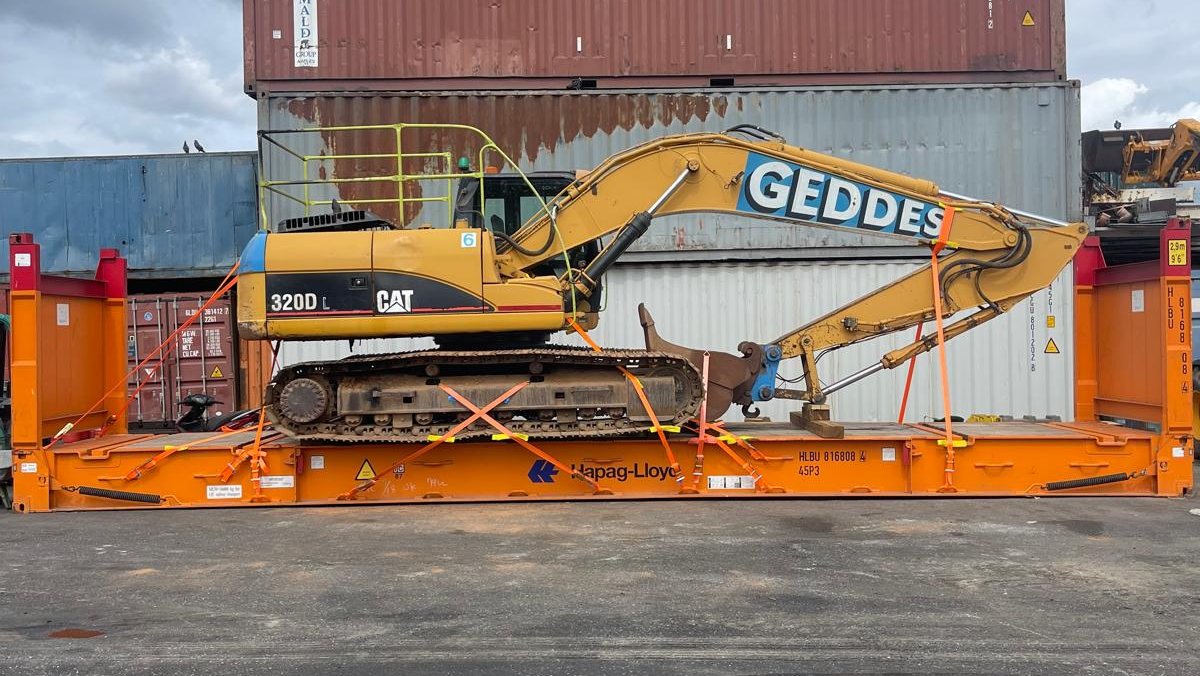
2. Construction & Infrastructure Projects Moving steel structures, piling rigs, or prefabricated modules requires precision. We provide expert loading for Flat Racks and Open-Tops, ensuring that out-of-gauge (OOG) cargo is secured against the high dynamic forces of sea transit.
3. Energy, Oil & Gas For the energy sector, we handle the complex logistics of generators, turbines, and oversized valves. We ensure all securing methods comply with the IMO CTU Code, providing the peace of mind needed for high-stakes shipments.
4. Freight Forwarders & Export Agents We act as your technical partner on the ground. We help forwarders avoid port rejections and costly delays.
5. Heavy Plant & Automotive From agricultural harvesters to military vehicles, we specialize in securing wheeled and tracked machinery. We utilize high-capacity lashing chains and friction-enhancing materials to guarantee zero-movement during transit.
Compliance
Standards & certifications
Loading containers and flat racks is governed by international safety conventions that ensure structural integrity and cargo stability across road, rail, and sea. We adhere to the below regulations.
Primary Regulatory Codes
- The CTU Code: The IMO/ILO/UNECE Code of Practice for Packing of Cargo Transport Units is the global gold standard. It provides mandatory and non-mandatory guidance for packing containers and flat racks to withstand dynamic forces.
- ISO 1496-1: This standard defines the structural strength and testing requirements for containers, including how much weight the floor, walls, and roof can handle.
Loading General Containers
- Weight Distribution: Cargo weight must be spread evenly across the floor. No single half of the container should bear more than 60% of the total cargo mass.
- Concentrated Loads: For heavy, compact items, use timber beams to spread the weight over the longitudinal floor members to avoid exceeding floor load limits.
- Vertical Centering: The centre of gravity should be kept as low as possible and as close to the mid-length and mid-width of the container as possible.
Loading Flat Racks
- Lashing Points: Flat racks are equipped with high-strength lashing brackets (often with a Maximum Securing Load (MSL) of 30kN to 50kN) welded to the side girders. We ensure we do not overload these brackets.
- Out-of-Gauge (OOG) Cargo: If cargo exceeds the flat rack dimensions, we must secure in a way so it does not obscure top corner castings, allowing the unit to still be lifted by standard spreaders.
- Weather Protection: OOG cargo on flat racks is often exposed; we can offer covering the cargo with tarpaulins to prevent environmental damage and ensure safety during transit.
Road-Specific Compliance (UK)
- Weight Limits: In the UK, the total gross vehicle weight (truck + container + cargo) must not exceed 44,000 kg for road haulage.
Why Choose Us
What makes us different
- Precision Engineering for Every Load: We don’t just "strap things down." We use precisely calculated lashing plans to balance longitudinal and transverse forces, ensuring even the most complex out-of-gauge (OOG) cargo remains stable in turbulent conditions.
- Total Regulatory Compliance: We navigate the maze of international standards for you. From ensuring every container is loaded to the correct stanard to meeting the rigorous IMO CTU Code , we protect you from costly fines and port rejections.
- Damage Prevention & Cost Savings: Professional stuffing and lashing significantly reduce the risk of cargo shifting, crushing, or breaking. By maximizing space efficiency and using the correct high-capacity materials, we often reduce the number of containers needed, lowering your overall per-unit shipping costs.
- Specialised Equipment & Expertise: Whether it's heavy machinery on a flat rack or fragile goods in a high-cube container, we use industrial-grade materials like 50kN lashing straps, and heat treated timber bracing to guarantee zero-movement.
- Peace of Mind: Our experienced teams handle the heavy lifting, allowing you to focus on your core business. You get the assurance that your high-value assets are secured by trained experts using the latest techniques to prevent loss at sea or on the road.
Specifications & Dimensions
Technical reference data — all measurements in mm unless noted
DRY CARGO CONTAINERS
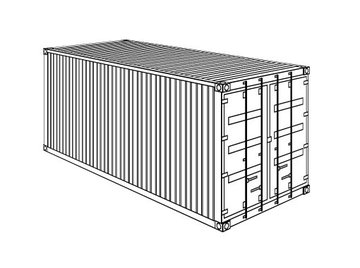
Dry cargo containers are suitable for most types of cargo. Aluminium containers have a slightly larger payload than steel, and steel containers have a slightly larger internal cube.
| Size | Door Openings | Internal Dimension | Weight (kg) |
Volume m³ |
||||
|---|---|---|---|---|---|---|---|---|
| Width | Height | Length | Width | Height | Gross | Tare | ||
| 20 FT | 2,340 | 2,292 | 5,900 | 2,350 | 2,395 | 30,480 | 2,350 | 33.2 |
| 40 FT | 2,340 | 2,292 | 12,032 | 2,350 | 2,395 | 32,500 | 3,750 | 67.7 |
For reference only. Exact dimensions may vary.
HIGH CUBE CONTAINERS
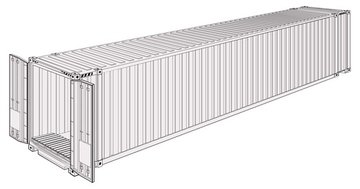
With high cube containers, you gain an extra foot in height compared with general-purpose containers. Ideal for light, voluminous cargo or bulk cargo. These extra volume containers come in steel and aluminium.
| Size | Door Openings | Internal Dimension | Weight (kg) |
Volume m³ |
||||
|---|---|---|---|---|---|---|---|---|
| Width | Height | Length | Width | Height | Gross | Tare | ||
| 40 FT | 2,340 | 2,585 | 12,032 | 2,350 | 2,695 | 32,500 | 3,900 | 76.2 |
| 45 FT | 2,340 | 2,585 | 13,556 | 2,352 | 2,698 | 32,000 | 4,900 | 86.0 |
For reference only. Exact dimensions may vary.
FLAT RACK CONTAINERS
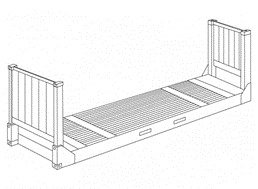
Flat rack’s are especially suited to heavy loads, OOG cargo or cargo that needs loading from the top or sides such as pipes and machinery. There are collapsible and non-collapsible containers with or without walls. Manufactured from steel.
| Size | Door Openings | Internal Dimension | Weight (kg) |
Volume m³ |
||||
|---|---|---|---|---|---|---|---|---|
| Width | Height | Length | Width | Height | Gross | Tare | ||
| 20 FT | — | — | 5,638 | 2,438 | 2,233 | 45,000 | 2,900 | 33 |
| 40 FT | — | — | 11,652 | 2,347 | 2,265 | 55,000 | 59,200 | 62 |
For reference only. Exact dimensions may vary.
OPEN TOP CONTAINERS
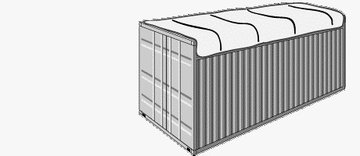
Allowing cargo to be loaded from the top, open top containers are particularly suitable for bulky cargo such as machinery. They are fitted with a PVC tarpaulin cover and attachable bows with cable sealing devices. The container doors can be removed to make stuffing of cargo more convenient. Manufactured from Steel.
| Size | Door Openings | Internal Dimension | Weight (kg) |
Volume m³ |
||||
|---|---|---|---|---|---|---|---|---|
| Width | Height | Length | Width | Height | Gross | Tare | ||
| 20 FT | 2,338 | 2,280 | 5,895 | 2,350 | 5,895 | 30,050 | 2,450 | 32.5 |
| 40 FT | 2,340 | 2,276 | 12,029 | 2,350 | 12,029 | 32,500 | 4,050 | 66.8 |
For reference only. Exact dimensions may vary.
Get in Touch
Have questions? Contact our team directly — we're happy to help.